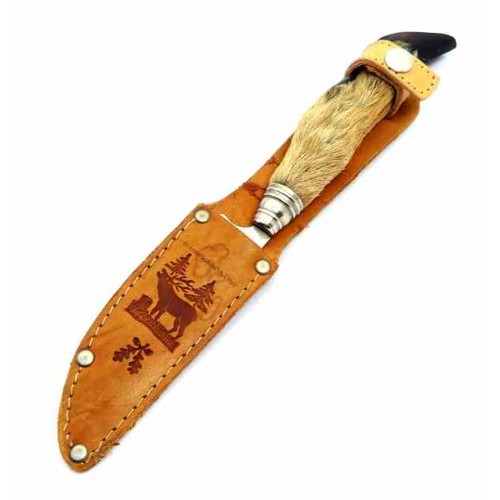
The term "Nicker" comes from the German word "nicken" (to bend/nape). Traditionally, it was a hunting knife designed to quickly and humanely dispatch small game or roe deer by inserting the point into the base of the skull (the nape of the neck). Today, they are primarily considered dress knives (Trachtenmesser), carried in the side pocket of traditional leather trousers (Lederhosen) in regions like Bavaria or Austria.
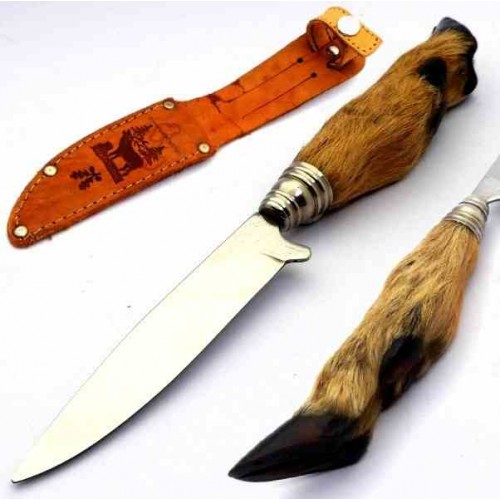
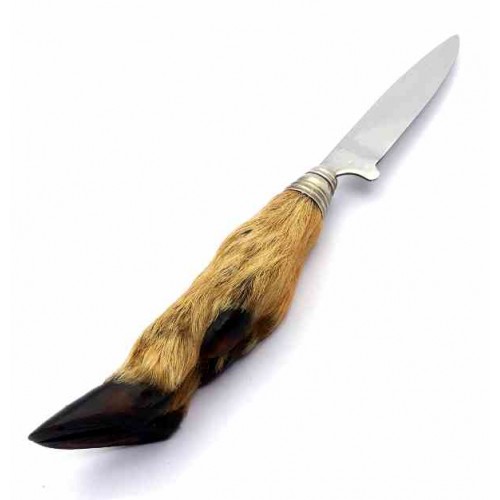
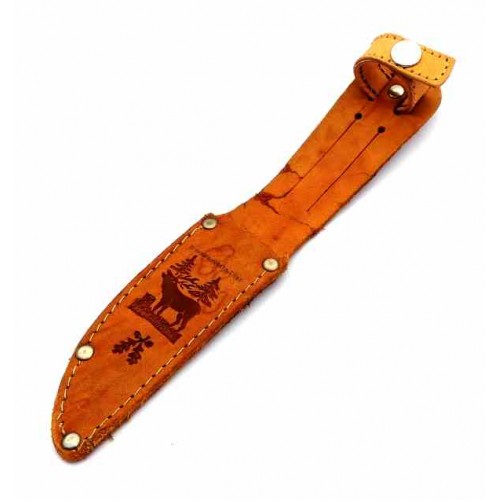
The Handle (Roe Deer Hoof): This is the most striking feature. It is a taxidermied, real roe deer hoof (Capreolus capreolus). This type of handle was extremely popular in the mid-20th century (1950s-1970s) as a hunting souvenir and folk art item. The Blade: Usually made of stainless steel or carbon steel, with a drop point or straight blade, designed for precision rather than rough cutting. The Bolster: This is the metal piece between the blade and the hoof. In this case, it has a classic ringed design that helps to securely hold the leg. The sheath: Made of tan leather with an engraving depicting a deer in the forest, reinforcing the hunting theme.
Origin: German (Solingen is the most famous city for these) or Austrian.
Interesting note: Although it may seem an unusual object today, in Central European hunting tradition, the complete use of the animal is highly valued, even transforming limbs into useful or decorative tools.
Important: This is exactly the same piece you see in the photos. The sheath is cracked from age and the closure strap has been replaced.
Materials:
Blade: stainless steel.
Handle: roe deer leg.
Sheath: leather.
Measurements:
Blade: mm.
Overall: mm.
Tickness: mm.
Weight: grs.
Made in
Lorem Ipsum is simply dummy text of the printing and typesetting industry. Lorem Ipsum has been the industry's standard dummy text ever since the 1500s, when an unknown printer took a galley of type and scrambled it to make a type specimen book.
- Availability: Out of Stock
- Product Code: nicker pata corzo