
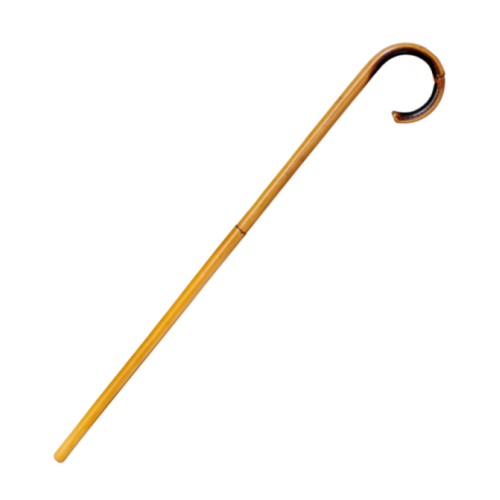
Reed cane, cachaba, or child's club. Gypsy reed stick.
Approximately 66 cm long (between 65 and 69 cm) and 10-12 mm thick.
Important: This is a non-controllable natural material; they are always different; no two are the same.
A cachaba is a cane or staff traditionally used as a tool for support, defense, or, in some cases, as a symbol of authority or power. This implement has been used since ancient times in various cultures, and although its use has declined today, it is still valued in sports, cultural, and ceremonial settings.
Characteristics of a Cachaba
Material: Cachabas can be made from a variety of materials, depending on the purpose and traditions of each region. Traditionally, they are made from reed, wood, bamboo, almond, oak, or cherry due to their durability, flexibility, and strength. Cachabas can also be found made of metal or synthetic materials such as fiber, especially in sports or modern settings.
Size and Shape: The length of a cachaba varies depending on its use. Generally, it measures between 90 and 1.5 meters, although shorter or longer variants exist. The shape is usually straight, but some cachabas may have a curved or decorative design, especially those used in ceremonies. The end of the cachaba may be sharp or have a more robust, club-shaped tip, depending on its function.
Traditional Function: Originally, the cachaba was used as a walking stick or for self-defense, especially in dangerous situations. In some cultures, such as those of ancient soldiers, the cachaba was also used as a physical training or combat instrument, which gave it value beyond its decorative aspect.
Ceremonial and Symbolic Function: In several cultures, the cachaba has been used as a symbol of authority or power. In religious, political, or social ceremonies, those in leadership positions often carry a cachaba as a symbol of their rank or tradition. This use is still observed in some indigenous communities or at events of cultural significance.
Cachaba in Sports: In certain sports, such as the "cachaba duel" or some wrestling competitions, this implement has maintained its presence. In these contexts, the cachaba not only serves a decorative purpose but is also a piece of equipment used in the practice of the discipline.
Maintenance: Cachabas require some care to prolong their lifespan. If they are made of wood, it is advisable to protect them from moisture and direct sunlight to prevent cracking or warping. Some modern cachabas may have special treatments to ensure their durability in various climatic conditions.
Uses and Benefits of a Cachaba
Physical Support: In its most basic function, the cachaba acts as a walking aid, especially useful for the elderly or those with mobility difficulties. Its long, straight design provides additional stability and balance.
Self-defense: Although no longer widely used for this purpose today, the cachaba has historically been an effective defense tool in dangerous situations. Its durability and long reach make it useful for maintaining distance from an attacker.
Cultural and symbolic value: In many cultures, the cachaba remains a symbol of respect and authority. Its presence in certain rituals or formal events reflects the connection to ancestral traditions.
Physical and sports training: In sports, the use of the cachaba in disciplines such as the "cachaba game" or in wrestling training can contribute to the development of strength, agility, and coordination.
Conclusion
The cachaba is an implement with a rich history, having evolved from a practical and defensive tool to a ceremonial and symbolic object, and in some cases, a sporting one. Although the cachaba's modern use is limited, it remains a valuable item for both those interested in history and those seeking a functional tool for sports or physical support.
Lorem Ipsum is simply dummy text of the printing and typesetting industry. Lorem Ipsum has been the industry's standard dummy text ever since the 1500s, when an unknown printer took a galley of type and scrambled it to make a type specimen book.
- Availability: In Stock
- Reward Points: 80
- Product Code: 500
